
Part 1 — Not Only Cities Interfere with Drones
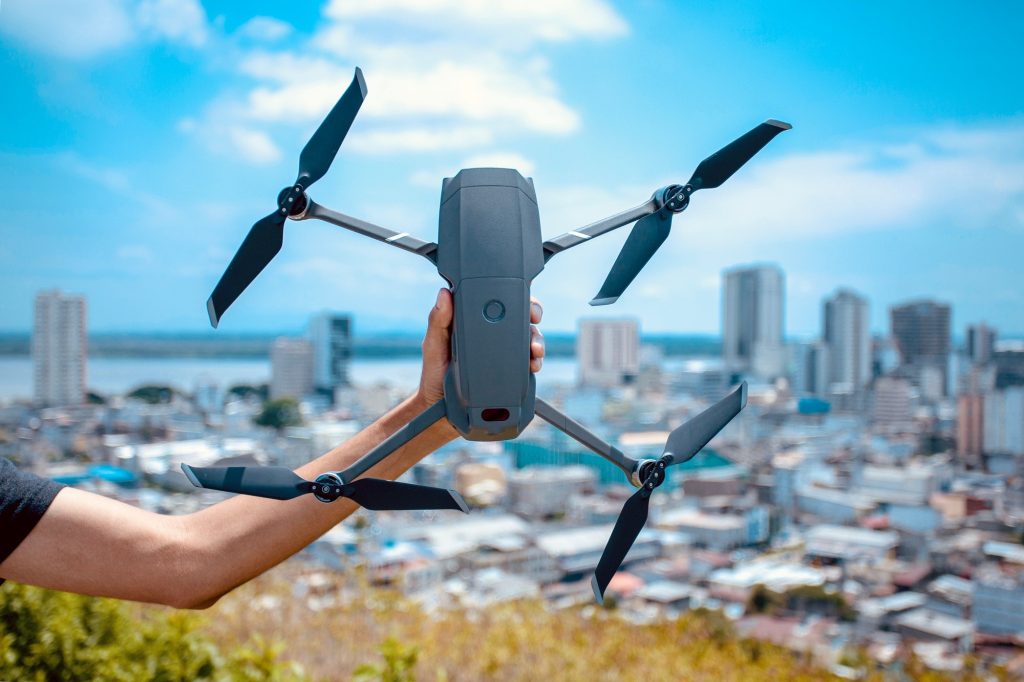
(Series: Drones, Data and Errors in Agricultural Environments) Drones are often associated with urban environments, which are full of invisible sources of interference such as dense concrete structures, glass façades, large reflective surfaces, countless radio signals, electromagnetic interference, GNSS noise, mobile networks, and multipath effects caused by reflected GNSS signals. All of these factors can […]
Why Buying a Drone Is Not Enough – A Competency-Based Approach to the Regulated Drone Operations
Drone technology has gone through a remarkable development in the recent years. Devices that available on the market, are becoming increasingly easy to operate, entry costs are gradually decreasing year-to-year, and application areas are rapidly expanding across industrial, agricultural, municipal, and research and development sectors. This often creates the false impression that drone operations arise […]
ResilienX: Drone Ecosystem as Newsroom Service
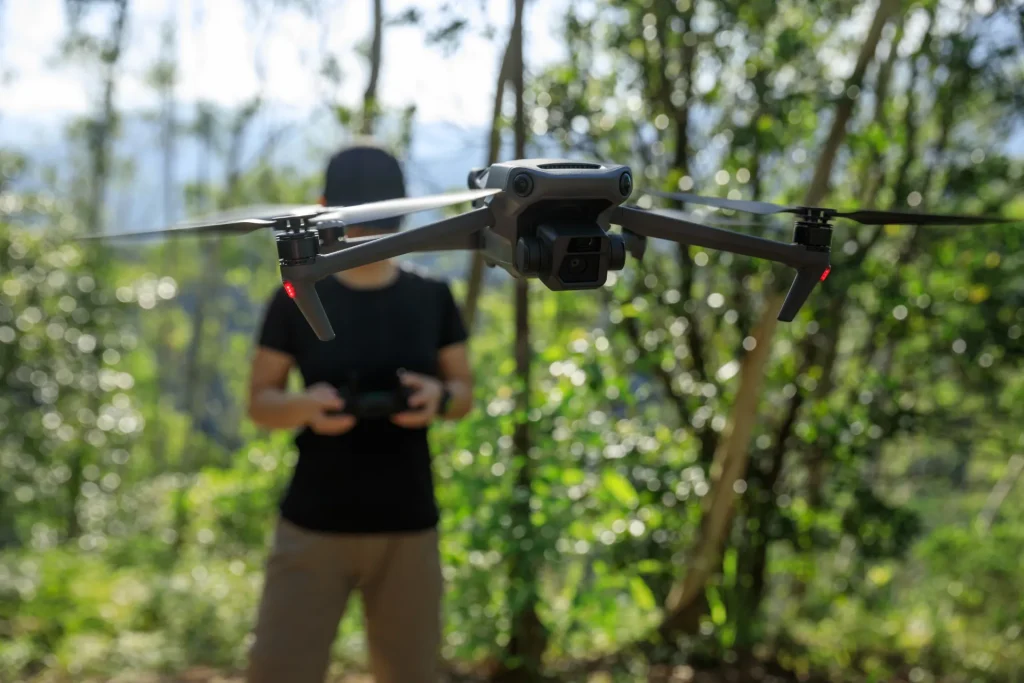
A collaboration between ResilienX and the Advanced Aerial Innovation Region (AAIR) has created a drone service model covering the city of Detroit and its surrounding area, in which ResilienX makes drone services available to all media outlets. The essence of the model implemented by ResilienX is that a single operator provides all media outlets with […]
Fast Flight – the German authority’s solution to speed up the licensing process
On December 2, the German Federal Aviation Authority (LBA- Luftfahrt Bundesamt) announced its Fast Flight program, which aims to speed up the process of obtaining an operational authorisation required in the specific category. As we have written many times on this site, the operator must meet stringent documentation requirements to obtain an operating permit. The […]
Renewed rules in the special category (Part 11)
After extensive preparation, the so-called AMC amendment containing SORA 2.5 was published on the European Aviation Safety Agency (EASA) website on September 29. The renewed AMC (Accepted Method of Compliance) describes the new methodology for mandatory risk analysis in the special operation category, which must be applied uniformly throughout the European Union. Applications for new […]
Artificial Intelligence and Drones
Artificial intelligence, like drones, has become a part of everyday life, as has the fact that aviation generates an extraordinary amount of data. Given that one of the great advantages of artificial intelligence is its ability to recognize patterns in large amounts of data, the question arises as to how the capabilities of artificial intelligence […]
Design verification report

Our articles increasingly mention the design verification report (DVR) and its importance. But what is this report? We will now introduce it. Three operational categories have been established in the EU legal framework: open, special, and certificated. In the operational categories, the same level of flight safety must always be ensured and maintained, but this […]
Nokia: it is a drone, not a phone
Nokia Solutions and Networks OY (Nokia), a Finnish company that became known for its mobile phones in the 1990s and 2000s and is now involved in network development, recently announced that the drones they developed have obtained the design verification report (DVR) from the European Union Aviation Safety Agency (EASA) regarding the M2 risk reduction […]
Renewed rules in the special category (Part 10)
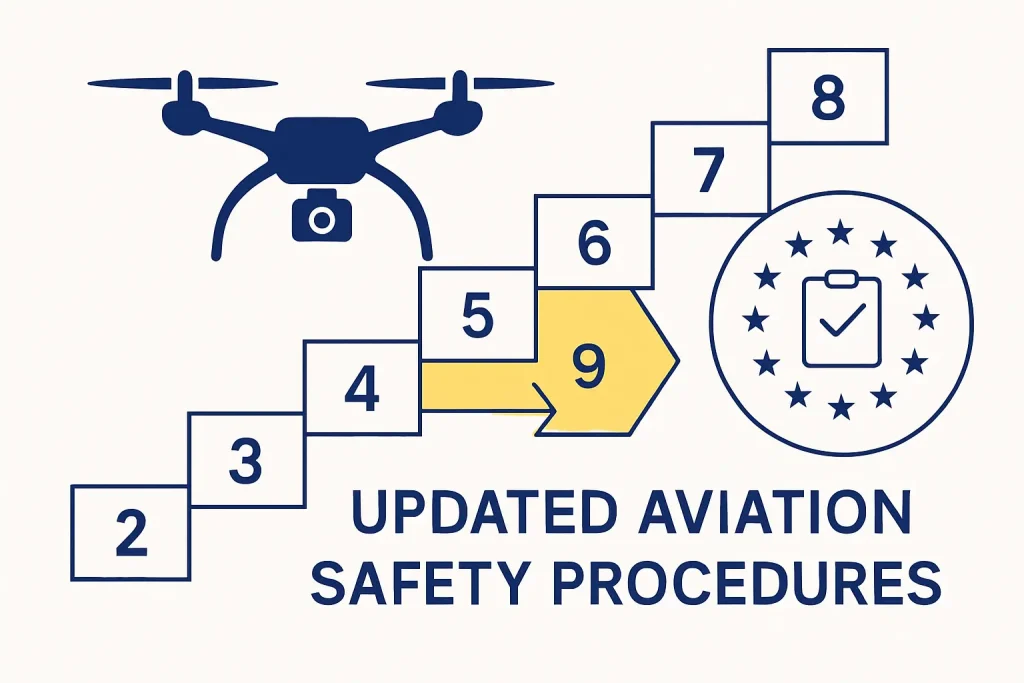
After a lengthy preparation, the so-called AMC amendment containing SORA 2.5 was published on the European Aviation Safety Agency’s (EASA) website on September 29. The renewed AMC (Acceptable Means of Compliance) describes the new methodology for mandatory risk analysis in the special operation category, which must be applied uniformly throughout the European Union. Applications for […]
Artificial Intelligence and Aviation

Predictive maintenance, flight data, safety performance analysis, and an AI-based flight safety management system. These are just a few examples of how artificial intelligence can be utilized in aviation. However, it is not unimportant how an operator uses this technology, which is why the European Aviation Safety Agency (EASA) recently published a proposal outlining the […]