
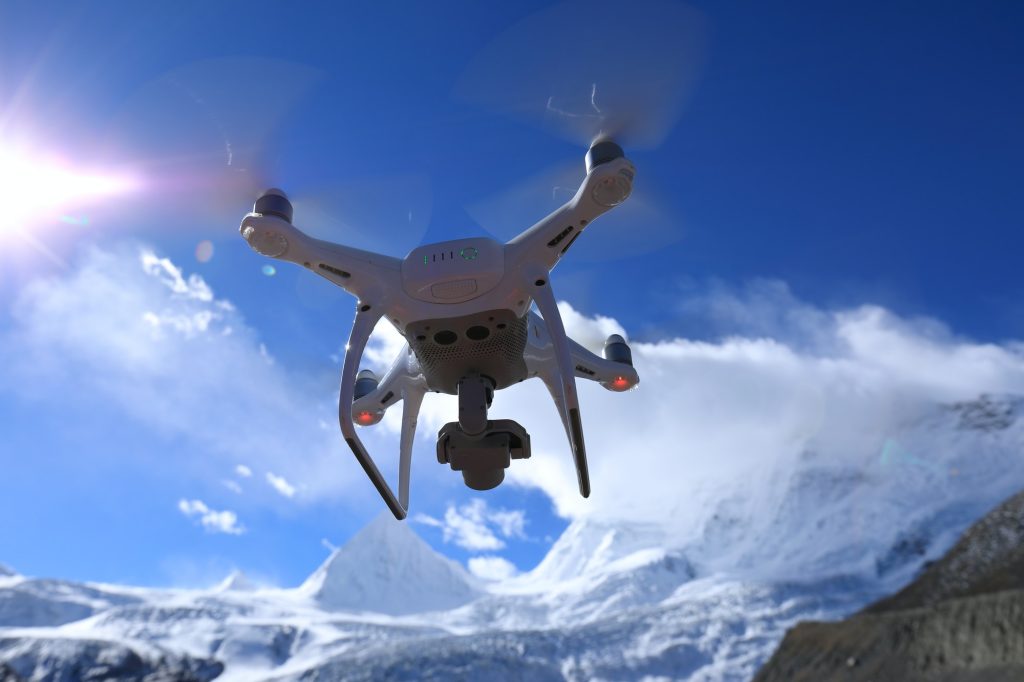
Drone technology has gone through a remarkable development in the recent years. Devices that available on the market, are becoming increasingly easy to operate, entry costs are gradually decreasing year-to-year, and application areas are rapidly expanding across industrial, agricultural, municipal, and research and development sectors. This often creates the false impression that drone operations arise only technological issues and the purchase of the right equipment is sufficient to solve them.
Practical experience, shows that a significant proportion of drone projects fail not due to technical reasons, but because of missing legal, organisational, and operational competencies. Regulatory compliance, risk management, mission planning, and data management obligations jointly determine whether a drone operation can be carried out legally, safely, and sustainably or not.
The foundation of the European Union’s regulatory framework for unmanned aircraft is Commission Implementing Regulation (EU) 2019/947, which is currently in force and directly applicable in Hungary. The regulation introduces the open, specific, and certified operational categories and assigns different competency and authorisation requirements to each. The logic of the regulation is clearly risk-based: the primary factor is not the type of the aircraft, but rather the environmental and operational risks associated with the mission and the operator’s readiness.
Especially in the specific category, it becomes evident that lawful operation cannot be achieved merely by completing an online exam or a single drone registration. These operations require a detailed risk assessment, an operational concept, and the issued operational authorisation from the national civil aviation authority. Throughout this process, it can be seen that the focus is placed on human factors, decision-making, and the conscious management of all the connected risks.
Therefore, the drone-related does not end with knowledge of regulations. It also includes understanding the basics of airspace usage, applying the risk assessment methodologies, mission planning, and taking data management and data protection aspects into account. The absence of any of these competencies can lead not only to regulatory violations but also to business and reputational risks.
In this environment, education is not a simply knowledge transfer, but a process of shaping the necessary mindset. Competency-based training aims to enable participants to apply rules in real operational environments, assess complex situations, and make responsible decisions. This is particularly important in industrial and agricultural applications, where the use of drones can directly impact on human safety, production processes, or the safety of the critical infrastructure.
In conclusion, purchasing a drone is not a standalone solution, but part of a complex system with an intensive human focus. The basis of a successful and sustainable drone operation process lies in the availability of the appropriate competencies, which can only be developed through the structured, practice-oriented training. Regulated drone usage is therefore primarily an organisational and human challenge rather than a technological one.