
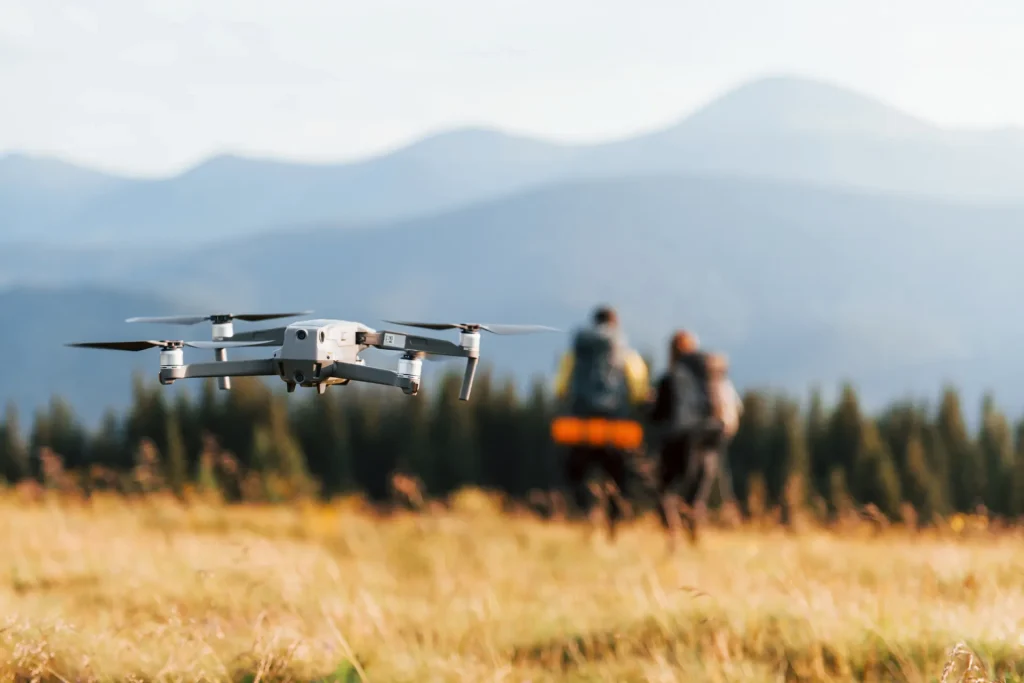
The typical misconception
As drone usage expands rapidly, we increasingly encounter the same misconception: “I bought the drone, I have already completed the exam, registered the aircraft, so now I can fly.” In reality, the situation is far more complex. Legal and regulatory compliance is not a single administrative step; it is a multi‑stage, interdependent process, designed to keep the risk of an operation manageable, and this is exactly the logic followed by the European drone regulation.
The framework: An EU-wide, risk-based regulatory approach
In Hungary (and across the other Member States of the European Union), the fundamental rules for drone operations are set in the Commission Implementing Regulation (EU) 2019/947. The regulation distinguishes three operational categories: open, specific and certified. The regulatory logic is risk-based: compliance requirements depending not only on the aircraft itself, but on the environmental and operational risks of the planned mission, as well as the operator’s level of preparedness.
Open – Specific – Certified: What does it mean in practice?
In the open category, lower‑risk operations can generally be conducted under predefined limitations. Importantly, “open” does not mean that a drone can be used “anywhere, anytime, for anything.” The purpose of these limitations is precisely to prevent risk from escalating to a medium or high level.
The specific category becomes relevant when a planned operation no longer fits within the boundaries of the open category. In such cases, a risk analysis, an operations manual, and—where applicable—authority permit(s)/authorisation(s) are required. The specific category is not “only for large companies.” It can be relevant for any organisation that intends to use drones in a more complex environment, with higher liability exposure, or for a special‑purpose task.
The certified category is associated with the highest‑risk operations, where requirements and procedures are significantly stricter (for example, certification and organisational requirements).
Why is an exam or registration not enough?
Two issues are typical in day-to-day practice.
- The “paper equals compliance” misconception: formal steps (training, exam, registration, documentation) are necessary, but they do not automatically make a specific flight lawful and safe. The decisive question is always whether the given operation, together with its environment, risks and execution, meets the applicable requirements.
- Underestimating mission planning: the key to working compliance is structured planning—what we do, where, when, in what environment, under which risks, and with which controls. The essence of the risk-based approach is that regulation is not an administrative obstacle; it is a safety logic that defines the minimum level of control that can reasonably be expected.
Regulatory compliance as an organisational practice
In institutional and corporate environments, compliance becomes stable when it is not “carried on someone’s back,” but operates as an organisational system. Typical elements include:
- clarifying roles and responsibilities (who plans, who flies, who checks, who approves),
- a standard operating process aligned with PDCA (Plan: planning – Do: execution – Check: post-operation review – Act: corrective action and improvement),
- documentation and feedback loops,
- built-in data governance and privacy controls,
- continuous competence development.
This is particularly important in industrial and agricultural use cases, where the business value of the operation is accompanied by higher liability and reputational exposure.
A working practice is the real difference.
The purpose of drone regulation is not to make drone use impossible, but to ensure that operational risk can be managed with proportionate controls. Therefore, the decisive question is not whether “we have a drone and an exam”, but whether we have a working system: planning, responsibility, risk management and competence.
In the next article, we will build on this: “exam, authorisation or real knowledge”—what drone competence means today, and where organisations typically struggle in practice.