
Introduction
For a long time, the drone market was optimised for “one-off” operations: one drone, one pilot, one task, plus some airspace administration. However, as the number of simultaneous UAS operations grows (industry, infrastructure, agriculture, urban services), the overall load on the system increases as well: more stakeholders, more routes, more potential conflicts, more data—and with that, more compliance pressure. And this is without even mentioning other factors such as weather and conventional manned air traffic, which can also appear as risks.
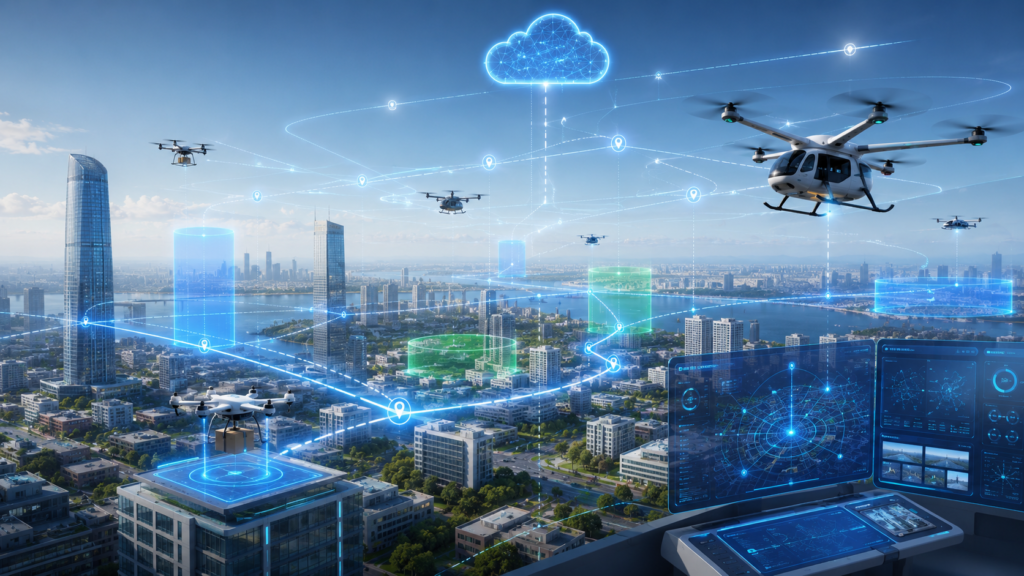
This is exactly the problem that Unmanned Aircraft System Traffic Management (UTM) aims to address, along with its regulated European counterpart, so-called U-space. U-space is a digital set of services and procedures designed to improve the planning and traceability of drone operations and to support safe integration with traditional manned aircraft traffic.
1) What is UTM?
UTM (Unmanned Aircraft System Traffic Management) is an umbrella term: it refers to services and processes that digitally manage the “traffic side” of drone operations. This may include handling flight intentions, preventing conflicts, providing a traffic situation picture, identification/tracking, and publishing dynamic restrictions (e.g., temporary zones). The latter is particularly important when the airspace is intended to be used simultaneously for recreational and state purposes—ensuring open access, while still guaranteeing the right priorities. This is where dynamic restrictions become essential.
2) What is U-space?
With the U-space regulatory framework (in particular Implementing Regulation (EU) 2021/664), the EU created a regulated environment in so-called U-space airspaces. The aim of the regulation is that, in certain parts of UAS geographical zones (geo-zones) designated by Member States, drone operations may only be carried out by using specific digital services—so the system can ensure safe integration and manage increasing traffic.
3) U1–U4 and the logic of phased rollout
U-space services are not introduced all at once; they are typically interpreted as “maturity levels”: starting from basic services (identification, registration, basic traffic information) and progressing toward more advanced capabilities (dynamic airspaces, conflict management, higher levels of automation).
SESAR’s U-space rollout and related projects (such as USIS) already mention functions in the era of “initial services”, including e-Identification (e.g., direct remote identification), e-Registration (web-based digital registration of aircraft, routes and intended use), tracking/situation monitoring (continuous traffic monitoring), flight permissions, and dynamic no-drone zone management. The essence of the system is digital coordination and consistent data exchange among all airspace participants.
4) Why it matters today, especially from a security perspective
- More simultaneous operations become possible: the scalability of “ad hoc” planning and manual coordination is limited, but automated conflict detection and resolution can make it feasible—even with constrained resources.
- Compliance and auditability: customers and authorities increasingly expect decisions to be traceable and the data chain to be retrievable. These services can provide that transparency.
- Interoperability: publishing geo-zones, authorisation and information data in a standardised, machine-readable way (and enabling “geo-awareness” in drones) reduces misunderstandings—but only if all actors rely on the same official data environment.
This article is based on summaries of EASA’s U-space regulatory framework (Easy Access Rules / (EU) 2021/664), materials from the SESAR U-space programme and the USIS project, and the HungaroControl USIS information materials.
In the next article, we will briefly cover the EU U-space legal framework: 2021/664, 2021/665 and 2021/666—and what these mean in everyday operations.